Vertical Storage Ideas for Small Apartments: Use Height Before Floor Space
Make a small apartment feel more organized by using vertical storage, tall narrow furniture, over-door organizers, shelf risers, and other ways to turn unused height into useful space.
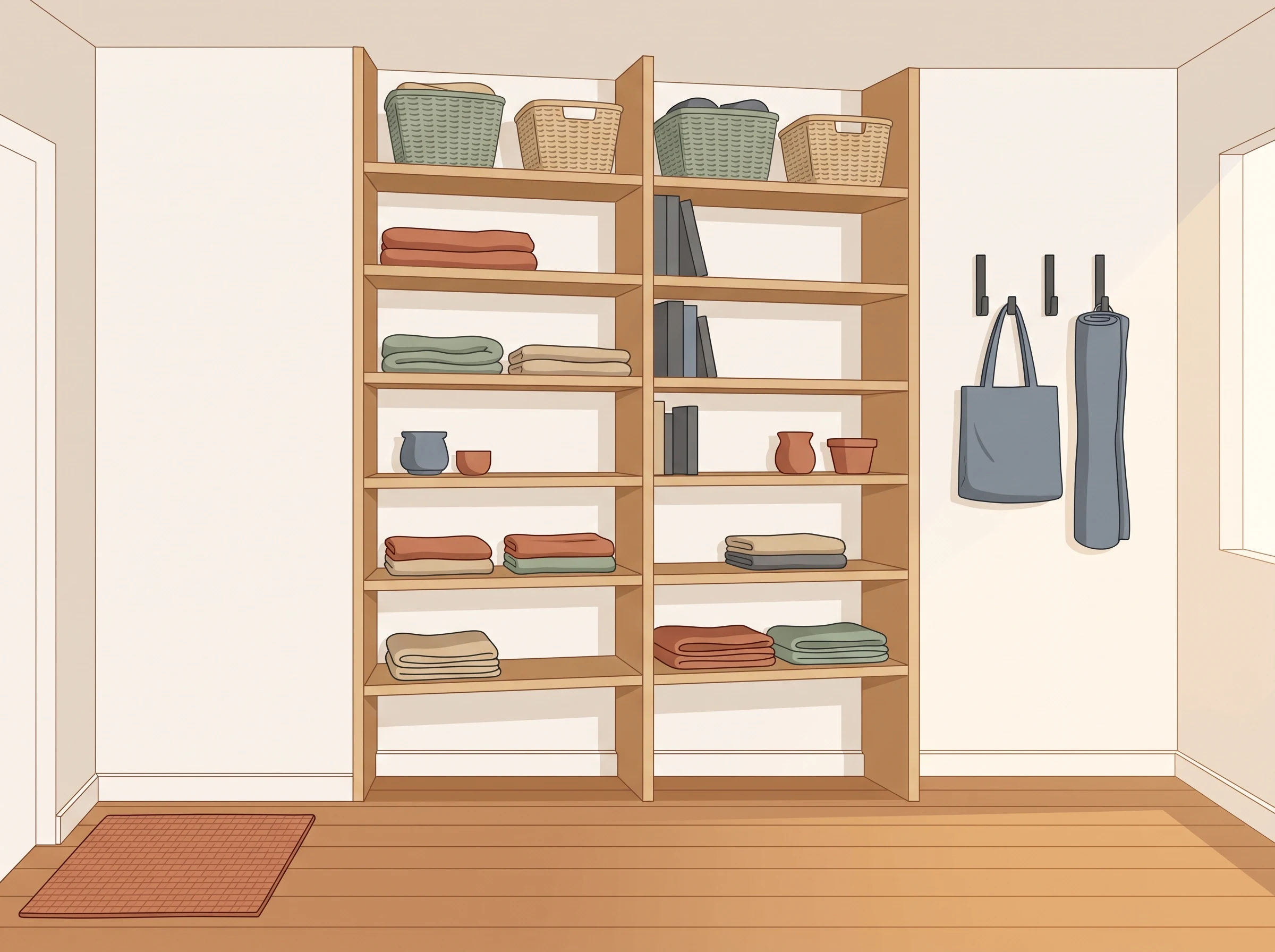
Small apartments have a fixed amount of floor area.
But storage does not have to stop at waist height.
Looking upward can reveal:
- empty space above existing furniture,
- unused door surfaces,
- tall cabinet interiors,
- open wall area,
- wasted height inside closets, and
- room for tall narrow storage rather than wide furniture.
Current IKEA small-space guidance explicitly recommends going vertical when floor space is limited, using shelving and wall storage to make use of height rather than consuming additional floor area.
The important principle is:
Use height intelligently—not simply by buying the tallest furniture available.
1. Replace Wide Storage With Tall, Shallow Storage
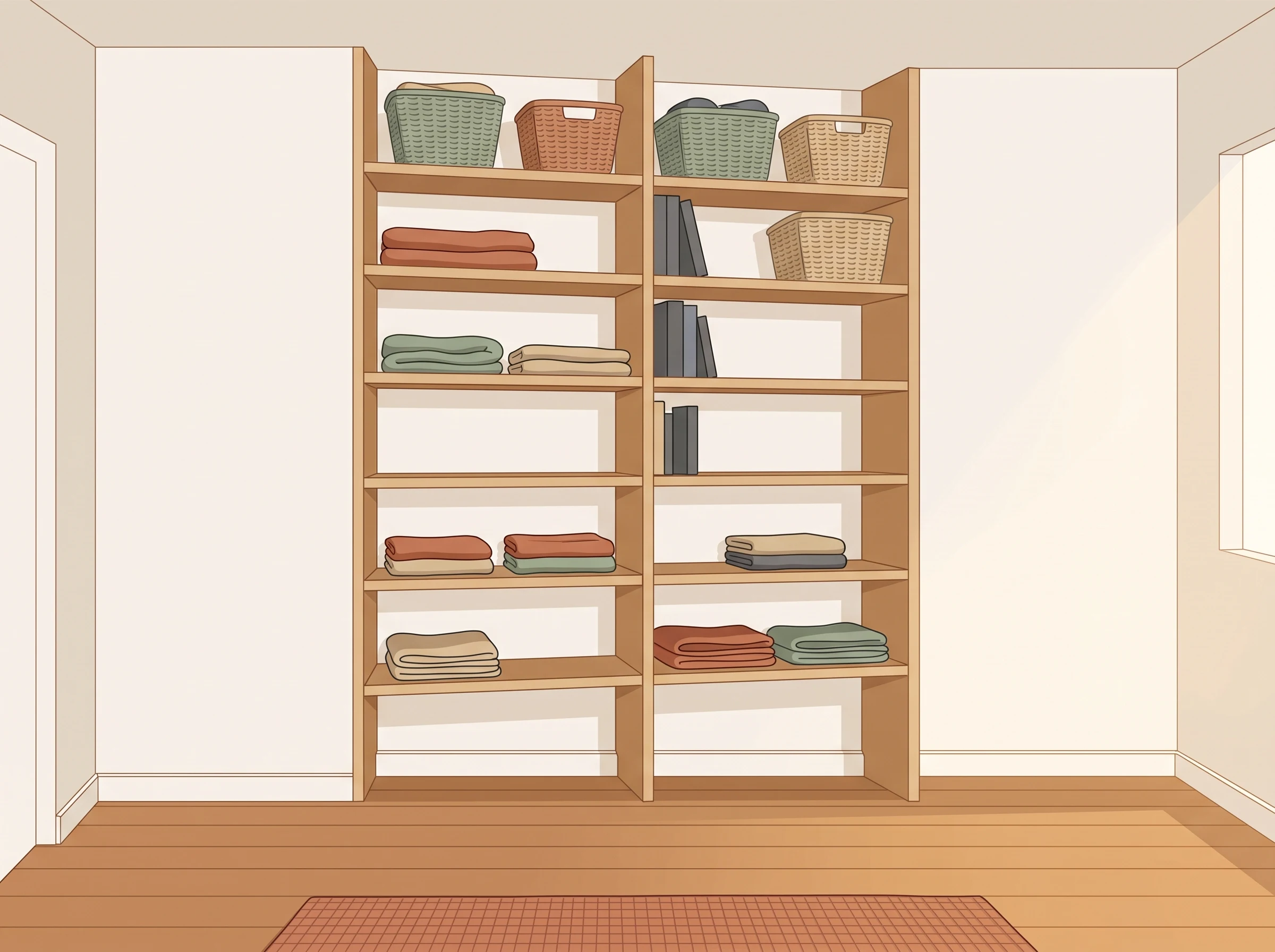
Suppose you have space for either:
LOW + WIDE

or

TALL + NARROW
In a compact room, the second option may preserve more useful floor and walking space.
Possible applications include:
- books,
- baskets,
- office supplies,
- folded clothing, and
- household accessories.
Product slot
Tall narrow shelving unit
What matters most
Measure:
- width,
- depth,
- height,
- required clearance, and
- stability/installation requirements.
Depth can be especially important.
A tall cabinet that extends deeply into a walkway may save width without actually improving the room.
2. Use Shallow Vertical Shelves in Tight Areas
Some wall-storage systems are specifically designed to provide shallow shelves in areas where conventional furniture would project too far into the room.
For example, IKEA describes shallow vertical shelving as a way to use walls efficiently in tight spaces while taking up relatively little room depth.
Product slot
Shallow vertical shelf
Good for
- books,
- small baskets,
- decor mixed with useful storage, and
- lightweight everyday objects where appropriate.
Consider
Wall-mounted systems require correct installation.
Do not choose a wall shelf solely because it is narrow.
Its installation and intended load must also suit the location.
3. Use the Full Height of Closet Interiors
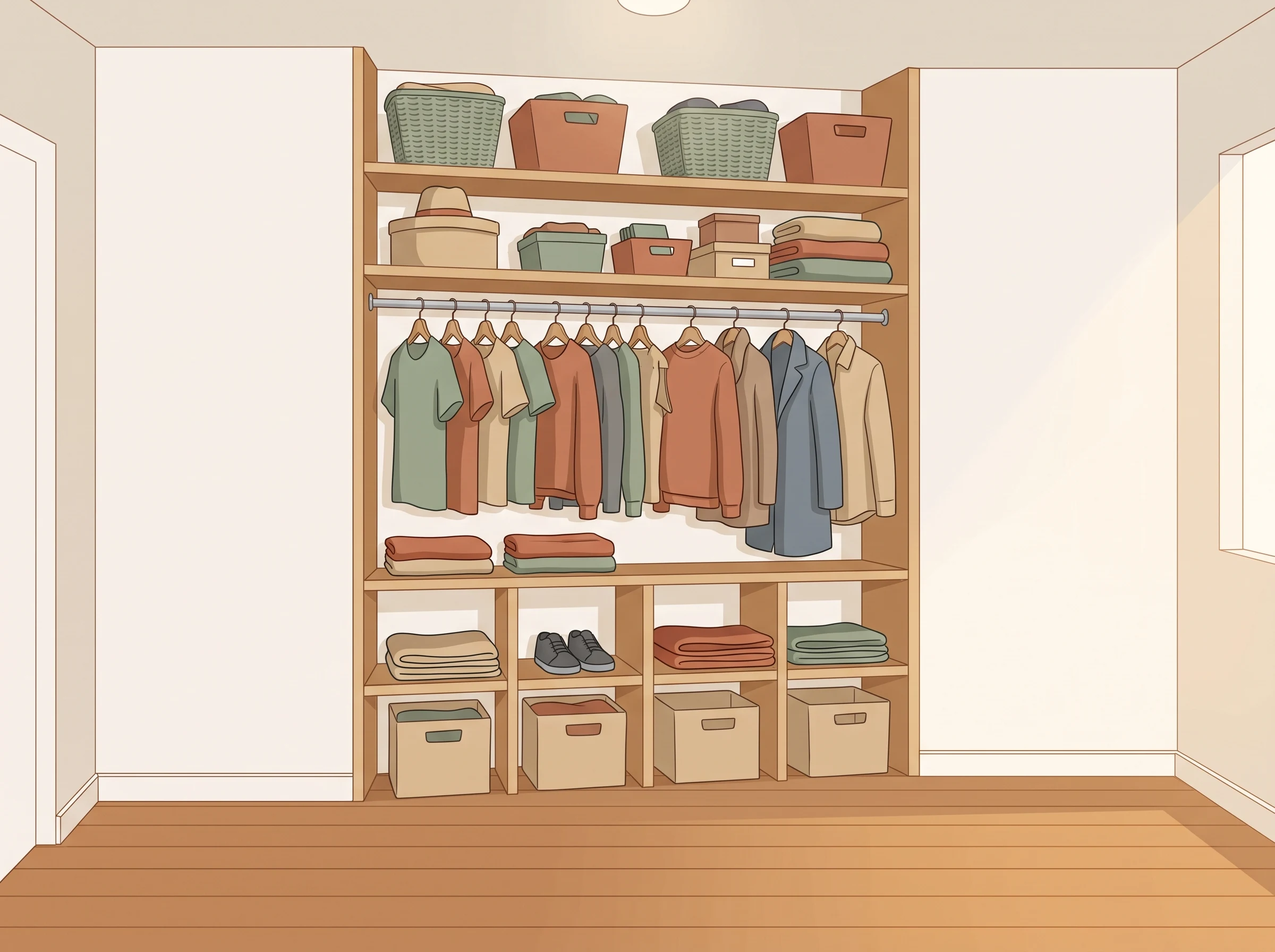
Closets often have unused vertical volume.
Common examples include:
- a large gap above short hanging clothes,
- high shelves holding loose objects, and
- empty space below hanging garments.
Possible solutions include:
- hanging shelves,
- secondary rods,
- stacking bins, and
- compact drawer units.
Product slot
Hanging closet shelf organizer
Why it may fit
It converts vertical hanging-zone space into several smaller storage levels.
Tradeoff
It also consumes some hanging width.
Use it when folded clothing needs storage more than additional hanging capacity.
4. Stack Inside Cabinets Before Adding Another Cabinet
Vertical thinking applies inside existing storage too.
A kitchen cabinet with mugs occupying only the lower half of a shelf contains usable air above them.
Shelf risers and stackable organizers can turn that height into a second level.
IKEA’s small-space guidance similarly emphasizes using internal organizers so small objects have defined locations without expanding the storage footprint.
Product slot
Stackable shelf riser
Useful in
- kitchen cabinets,
- bathroom shelves,
- pantry storage, and
- office cabinets.
Consider
Both levels should remain accessible.
Do not maximize stacking at the cost of usability.
5. Make Doors Part of the Vertical Storage System
A door provides a tall storage surface without requiring another piece of furniture.
Over-door systems can provide:
- pockets,
- hooks,
- baskets, and
- shoe storage.
Small-apartment organization guidance frequently recommends over-door organizers as a way to gain vertical capacity where wall or floor space is limited.
Product slot
Over-the-door organizer
Good for
- accessories,
- shoes,
- bags, and
- household supplies.
Measure
- door thickness,
- top clearance,
- organizer depth, and
- swing clearance.
6. Use Vertical Hooks for Frequently Used Objects
Not every vertical-storage solution needs shelves.
Hooks can use a narrow strip of wall or other appropriate surface for:
- bags,
- scarves,
- hats,
- towels, and
- frequently used accessories.
IKEA currently sells vertical hook systems specifically positioned for using small or tight spaces for storage, illustrating the underlying principle.
Product slot
Vertical hook rack
Best for
Objects that are:
- relatively lightweight,
- used frequently, and
- naturally hangable.
Important
If the rack requires secure wall mounting, follow its installation instructions.
Do not substitute adhesive mounting unless the product explicitly supports it.
7. Use a Tall Rolling Cart When You Need Both Height and Mobility
A cart can provide several storage levels while maintaining a relatively small footprint.
Small-apartment organization guidance commonly recommends tiered carts because they can work in:
- kitchens,
- bathrooms,
- home offices, and
- craft areas.
Product slot
Tall compact rolling cart
Best for
Storage that may need to move between positions.
Consider
A tall cart should still have a footprint and construction appropriate to its intended use.
Do not overload it simply because it has multiple tiers.
8. Use High Storage for Low-Frequency Items
The highest storage locations are usually the least convenient.
That makes them appropriate for:
- seasonal items,
- spare bedding,
- luggage,
- occasional serving pieces, and
- archives.
Use lower levels for things you reach for every day.
A simple hierarchy:
HIGH
rarely used

MIDDLE
regularly used

LOW / EASY REACH
daily use
This is often more useful than organizing solely by category.
9. Combine Open and Closed Vertical Storage
A tall wall filled entirely with exposed belongings can make a small room feel visually busy.
Instead, combine:
Open storage
For:
- books,
- attractive baskets, and
- frequently used objects.
Closed storage
For:
- paperwork,
- cables,
- clothing, and
- irregular supplies.
IKEA’s small-space guidance presents both open shelving and internal/closed organization as complementary strategies.
Product slot
Tall shelving unit with bins or closed compartments
This could be one product or a shelving system plus compatible containers.
10. Don’t Treat Every Empty Wall as Storage
Vertical storage can become excessive.
If every wall contains:
- shelves,
- hooks,
- racks, and
- bins,
the apartment may technically store more while feeling more crowded.
Leave visual breathing space.
Use vertical storage where it solves a real category problem.
Not simply because a wall is empty.
Use Vertical Storage by Room
Bedroom
Consider:
- tall narrow shelving,
- hanging closet organizer, and
- over-door storage.
Kitchen
Consider:
- shelf risers,
- vertical pantry storage, and
- wall storage where appropriate.
Bathroom
Consider:
- tall carts,
- door storage, and
- narrow freestanding shelving.
Home Office
Consider:
- vertical files,
- desktop shelving, and
- narrow book storage.
Entryway
Consider:
- vertical hooks,
- tall shoe storage, and
- door organizers.
Measure More Than Height
Before choosing vertical furniture, record:
| Measurement | Why |
|---|---|
| Ceiling height | Confirms total available space |
| Product height | Basic fit |
| Width | Determines wall/floor footprint |
| Depth | Protects circulation |
| Baseboard depth | Can prevent flush placement |
| Door/window clearance | Avoids interference |
| Outlet/switch location | Maintains access |
| Required anchoring area | Affects placement |
A tall piece that fits between floor and ceiling may still be wrong for the room if it blocks a switch or projects into a walkway.
Vertical Storage and Furniture Safety
Vertical storage places more material higher above the floor, so stability deserves attention.
For wall-mounted products, use the wall fasteners and installation method appropriate to the product and wall construction. IKEA, for example, explicitly warns that some vertical storage products must be securely anchored.
For clothing-storage furniture, tip-over safety is particularly important. CPSC continues to enforce mandatory stability requirements and issued multiple dresser recalls in 2026.
Do not:
- intentionally omit required anchoring,
- improvise a mounting method, or
- assume a tall unit is safe because it feels heavy.
Follow manufacturer instructions.
Product Opportunities for This Guide
For the lean affiliate version, research one strong option for each useful slot:
- Tall narrow shelving
- Shallow vertical shelf
- Hanging closet organizer
- Stackable shelf riser
- Over-the-door organizer
- Vertical hook system
- Tall compact cart
- Optional shelving + closed-bin system
A finished article likely needs only five or six recommendations.
Some concepts are better left as general advice.
Choose the Solution by the Type of Height Available
| Available vertical space | First solution to consider |
|---|---|
| Narrow floor-to-ceiling zone | Tall narrow shelving |
| Shallow wall area | Shallow vertical shelf |
| Closet hanging zone | Hanging organizer |
| Empty cabinet height | Shelf riser |
| Door | Over-door storage |
| Narrow wall strip | Hooks |
| Flexible open area | Tall cart |
| High inaccessible area | Seasonal storage |
The Bottom Line
When a small apartment feels full, the next useful storage location is often above, not beside, what you already own.
But vertical storage works best when you match the solution to the kind of height available:
- inside cabinets,
- behind doors,
- inside closets,
- on suitable walls,
- above existing storage, and
- within a narrow floor footprint.
Use the easiest levels for daily belongings and reserve high storage for things you need less often.
And when a storage system requires anchoring, treat safe installation as part of the solution—not an optional inconvenience.
Relevant options
Product considerations
These are practical product types to evaluate against your measurements and installation limits.
Tall narrow shelving unit
Tall narrow shelving unit
May work well for:Comparing options for limited floor space
- Useful when
- Limited floor space
- Consider
- Confirm depth height shelf load and required anchoring
Potential benefits
- Relevant product category
- Retailer destination available
Shallow bookcase
Shallow bookcase
May work well for:Comparing options for limited floor space
- Useful when
- Limited floor space
- Consider
- Confirm wall location and required anchoring
Potential benefits
- Relevant product category
- Retailer destination available
Over-door organizer
Over-door organizer
May work well for:Comparing options for limited floor space
- Useful when
- Limited floor space
- Consider
- Confirm door thickness top clearance and door swing
Potential benefits
- Relevant product category
- Retailer destination available
Stackable shelf riser
Stackable shelf riser
May work well for:Comparing options for limited floor space
- Useful when
- Limited floor space
- Consider
- Confirm shelf dimensions and load rating
Potential benefits
- Relevant product category
- Retailer destination available